
 English
 Español
 Portugues
 Pусский
 Français
 Deutsch
 日本語
日本語 한국어
한국어 العربية
 Italiano
 Polski
 ไทย
ไทย Türk dili
 हिन्दी
 Indonesia
 Melayu
 Tiếng Việt
 čeština
 Română
Rocket engine check valve
A rocket engine check valve is a critical one-way flow control device used in propulsion systems to ensure that propellants, pressurizing gases, or purge media move only in the intended direction. Its primary function is to prevent reverse flow, which could cause pressure instability, contamination, unwanted chemical reactions, or damage to upstream components. In rocket engines, where operating conditions are extremely demanding, check valves must perform reliably under high pressure, rapid pressure transients, vibration, shock, and wide temperature extremes.The basic operating principle of a check valve is straightforward. When upstream pressure exceeds the cracking pressure of the valve, the internal element opens and allows fluid to pass. If the pressure on the downstream side becomes greater than the upstream side, the valve closes automatically, blocking backflow. Depending on the application, the internal element may be a poppet, ball, disc, or flapper. Each design has advantages in terms of response time, leakage control, pressure drop, and tolerance to contaminated fluids.In rocket engine systems, check valves are commonly used in propellant feed lines, helium pressurization circuits, and purge systems. In liquid propulsion, they can help isolate oxidizer and fuel lines and protect tanks, pumps, or injectors from reverse migration. In pressurized gas systems, they maintain correct flow direction during startup, shutdown, and transient operation. Because a failure in one valve can affect the entire propulsion sequence, high reliability is essential.Material selection is especially important. Check valves used in rocket applications are often made from stainless steel, titanium, Inconel, or other high-strength alloys that resist corrosion, fatigue, and thermal stress. Seals and seats must be compatible with cryogenic fluids such as liquid oxygen or liquid methane, as well as with high-temperature gases and aggressive chemicals. Designers also aim to minimize dead volume, reduce leakage, and maintain stable performance after repeated cycles.Another important consideration is cracking pressure, the minimum pressure needed to open the valve. If cracking pressure is too high, it can reduce system efficiency or delay flow initiation. If too low, the valve may open unintentionally during pressure fluctuations. Engineers therefore carefully balance responsiveness with sealing performance. In some systems, check valves are paired with other components such as regulators, relief valves, or solenoids to create a controlled and fail-safe flow architecture.Testing and qualification are rigorous. Valves must be evaluated for flow capacity, leak tightness, cycle life, vibration resistance, thermal cycling, and compatibility with the intended working fluids. In rocket propulsion, even a small defect can have serious consequences, so each valve must meet strict standards before flight use.Overall, a rocket engine check valve is a small but indispensable component that supports safe, efficient, and reliable propulsion by allowing flow in one direction while preventing reverse movement under extreme operating conditions.
Product
Classificatie:
-
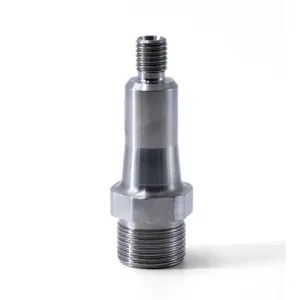
High pressure dual check valve for rocket engines
Hun classificatie: Safety Valve / Check ValveBekeken: 390Nummer:Release tijd: 2026-10-23 13:50:20Valve Body Material: 06Cr19Ni10 GB/T1220-2007
Sealing Material: GH4169 GJB713-89
Working Medium: Gas, Liquid
-
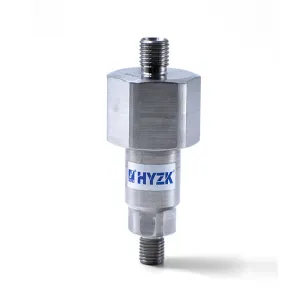
High pressure check valve for rocket engine
Hun classificatie: Safety Valve / Check ValveBekeken: 395Nummer:Release tijd: 2026-10-23 14:49:27Valve Body Material: GH4169 GJB713-89/06Cr19Ni10/14Cr17Ni2
Sealing Material: GH4169 GJB713-89/PTFE/NBR
Working Medium: Gas, Liquid
-
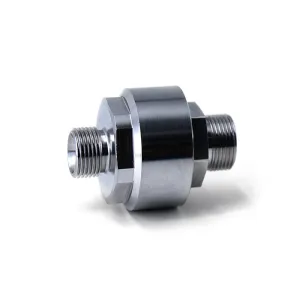
High pressure check valve for rocket engine
Hun classificatie: Safety Valve / Check ValveBekeken: 373Nummer:Release tijd: 2026-10-23 14:49:27Valve Body Material: 06Cr19Ni10/GH1469 GJB713-89
Sealing Material: Polytetrafluoroethylene (PTFE)
Working Medium: Gas, Liquid
Nieuws
Classificatie:
Geen zoekresultaten!
Geval
Classificatie:
Geen zoekresultaten!
Video
Classificatie:
Geen zoekresultaten!
Download
Classificatie:
Geen zoekresultaten!
Werving
Classificatie:
Geen zoekresultaten!
Aanbevolen producten
Geen zoekresultaten!



 WhatsApp
 Telefoon