
 English
 Español
 Portugues
 Pусский
 Français
 Deutsch
 日本語
日本語 한국어
한국어 العربية
 Italiano
 Polski
 ไทย
ไทย Türk dili
 हिन्दी
 Indonesia
 Melayu
 Tiếng Việt
 čeština
 Română
High pressure gas pressure reducing valve (25MPa) for rocket engine control system
A high-pressure gas pressure reducing valve designed for a rocket engine control system is a critical component used to regulate and stabilize gas pressure from a high-pressure source, typically around 25 MPa, down to a lower and more usable downstream pressure. In rocket propulsion applications, precise pressure control is essential because even small fluctuations can affect engine performance, valve sequencing, thrust stability, and overall system safety. This type of valve is therefore engineered with strict requirements for accuracy, reliability, fast response, and resistance to extreme operating conditions.The main function of the pressure reducing valve is to maintain a stable outlet pressure despite changes in inlet pressure, flow demand, and ambient conditions. In a rocket engine control system, high-pressure gas is often used for actuating valves, pressurizing propellant tanks, or supplying control subsystems. The reducing valve ensures that this gas is delivered at the required pressure level for downstream components, preventing overpressure and protecting sensitive equipment. A well-designed valve helps maintain consistent system behavior during startup, steady operation, and shutdown phases.Because the inlet pressure may reach 25 MPa, the valve body must be made from high-strength materials capable of withstanding severe internal loading. Materials such as stainless steel, nickel-based alloys, or other aerospace-grade metals are commonly used due to their excellent mechanical strength, corrosion resistance, and thermal stability. Internal sealing elements must also tolerate high pressure, wide temperature ranges, and repeated cycling without leakage or degradation. The valve seat, diaphragm, poppet, spring, and control surfaces are typically optimized for durability and precision.Another important feature of this valve is its responsiveness. Rocket engine control systems often require rapid pressure adjustment to match transient operating demands. The pressure reducing valve must therefore react quickly to flow changes while avoiding oscillation, hunting, or pressure overshoot. Stable regulation can be achieved through careful internal flow-path design and accurate calibration of the regulating mechanism. In some systems, the valve may be mechanically self-operated, while in others it may be controlled by an external actuator or pilot stage for improved precision.Safety is also a major consideration. A pressure reducing valve used in a rocket environment must maintain leak-tight performance and reliable operation under vibration, shock, and thermal cycling. It should be tested thoroughly for pressure endurance, flow capacity, hysteresis, response time, and sealing integrity. Redundancy or fail-safe design may be included depending on system requirements.In summary, a 25 MPa high-pressure gas pressure reducing valve for a rocket engine control system is a high-performance pressure regulation device that enables safe, accurate, and stable gas delivery. Its robust construction, precise control characteristics, and resistance to harsh aerospace environments make it an essential element in modern rocket propulsion systems.
Product
Classificatie:
-
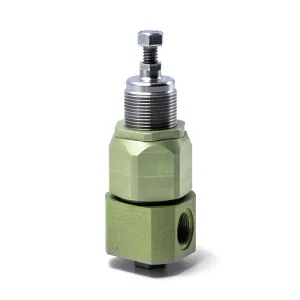
High pressure gas pressure reducing valve (25MPa) for rocket engine control system
Hun classificatie: Pressure Reducing ValveBekeken: 482Nummer:Release tijd: 2026-10-23 18:10:03Structure Type: Straight-through
Working Medium: Air/Nitrogen
Output Pressure: 0.8-1.6MPa
Nieuws
Classificatie:
Geen zoekresultaten!
Geval
Classificatie:
Geen zoekresultaten!
Video
Classificatie:
Geen zoekresultaten!
Download
Classificatie:
Geen zoekresultaten!
Werving
Classificatie:
Geen zoekresultaten!
Aanbevolen producten
Geen zoekresultaten!



 WhatsApp
 Telefoon